



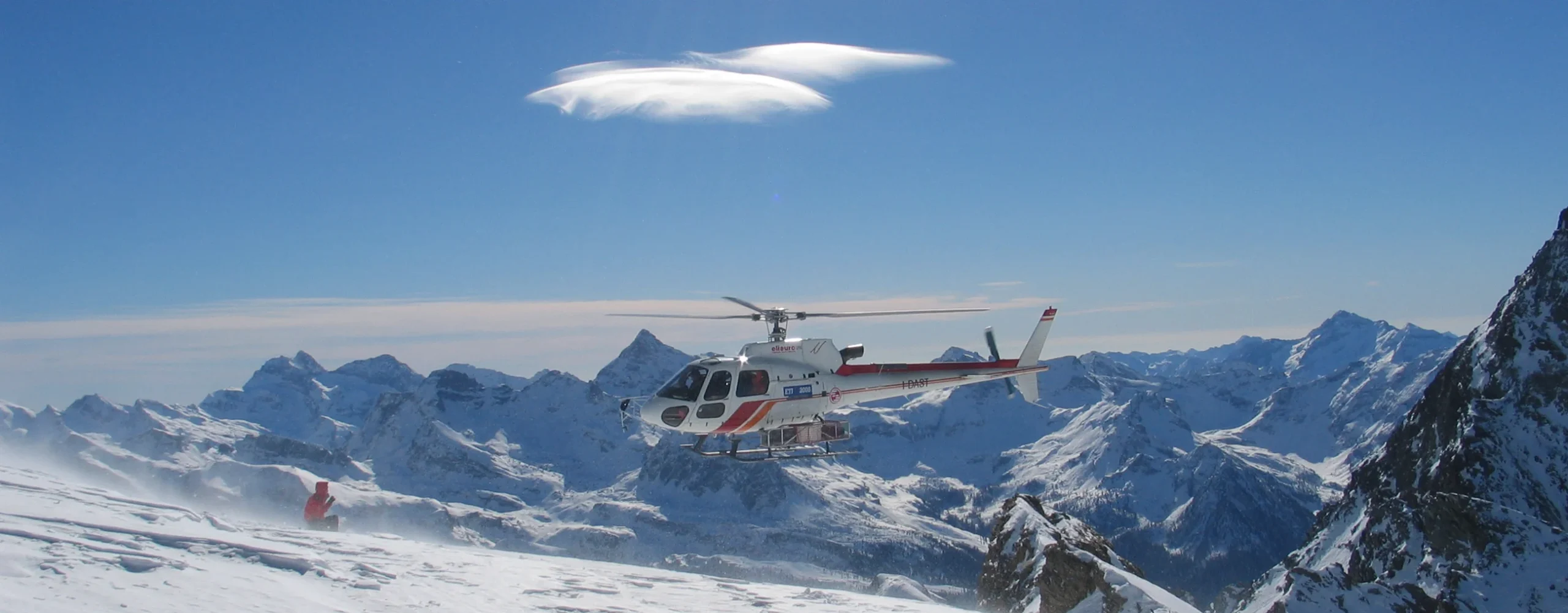
Helicopter drops woven into a private guided safari. We fly when the mountain says yes, to a world you would never otherwise see
A heli-ski safari with SwisSkiSafari is a private, guided ski and snowboard journey through Switzerland and Italy in which helicopter drops are woven into the trip whenever the mountain allows — descents of 1,500 to 2,500 vertical metres of untracked snow, from summits no lift will ever reach. The helicopter is never the whole trip: it is the crown on a safari that is already exceptional, designed by a team that has operated heli-ski programmes in these mountains since the very beginning.
And when it all comes together — the perfect blue sky, no wind, perfect fluffy snow and the mountain entirely to yourselves — everything seems to go quiet, and the magic happens. It is like being in another world: one you are privileged to be in, most often alone, with time to think, to enjoy those turns, and to live in gratitude for this amazing environment we get to explore, for a brief moment.
Twenty years of operating here has taught us how these trips are really won: in the Alps, the weather commands the helicopter, not the itinerary. So every heli day has a magnificent alternative already planned, several helicopter companies stand ready for when the window opens, and the safari is superb whether you fly twice or five times. We want the best possible trip for our guests — which is why we only promise what the mountain can deliver, and why what we deliver so often exceeds what anyone promised.
Contact us today.

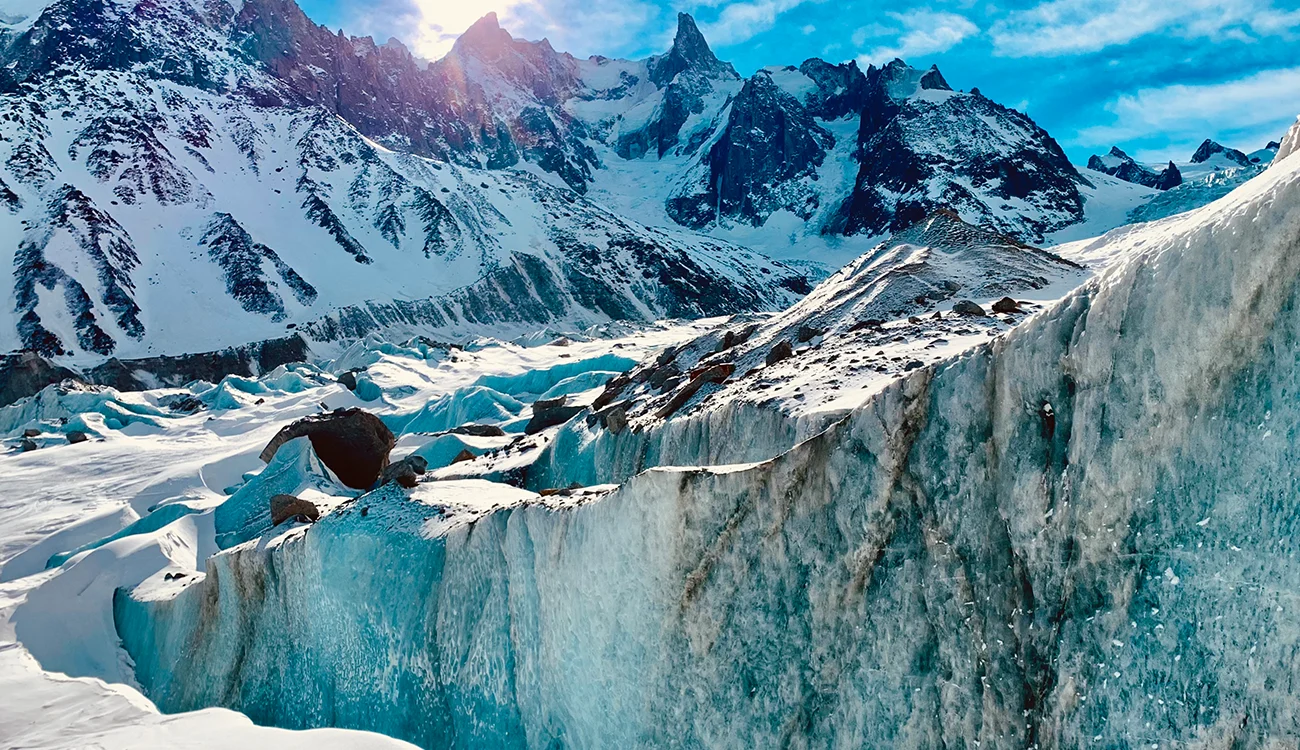
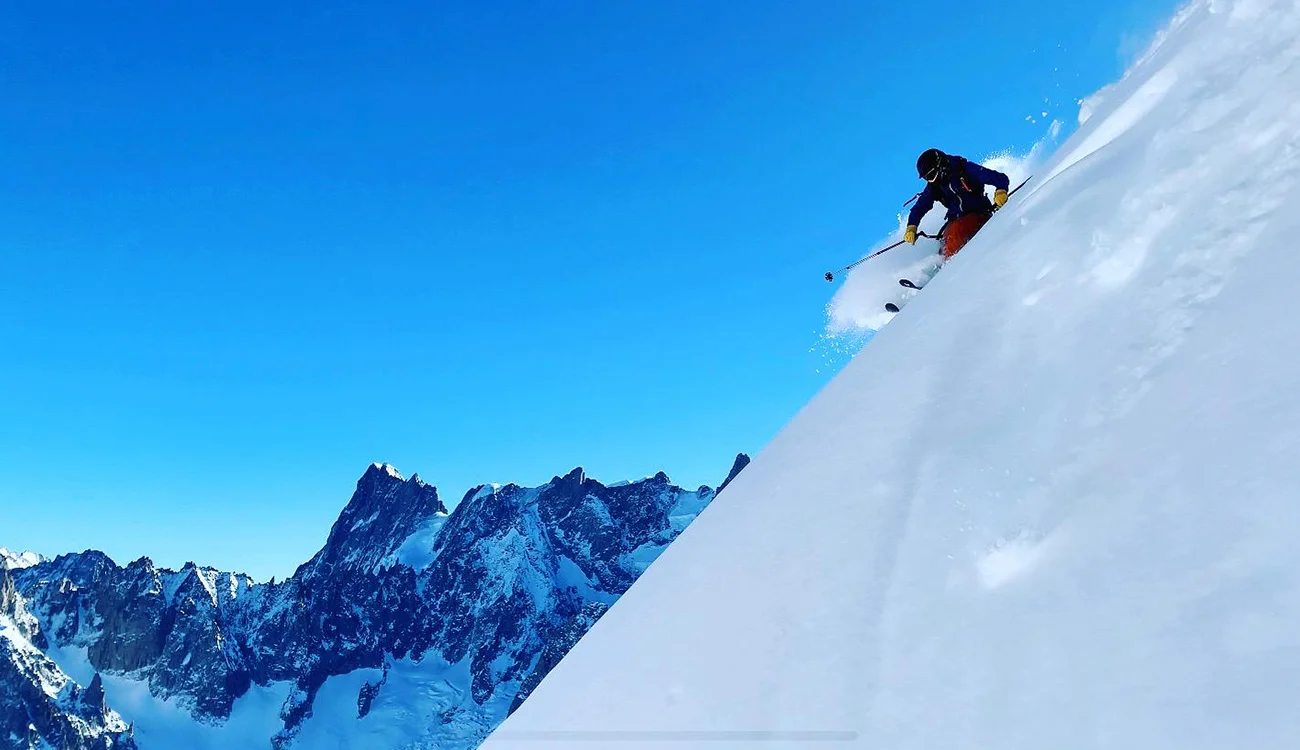
Where can you heli-ski in the Alps?
Switzerland and Italy — two countries, two completely different kinds of heli-skiing
Our heli-ski programmes are designed in Switzerland and Italy. In France, helicopters fly for rescue rather than for skiing — setting down on a mountain for leisure has been prohibited there since 1985 — so heli days belong to the other two countries of our range. The skiing itself knows no such border: if the best snow of the week is in France, a privately guided safari goes to France. Nothing is off the table.
And the two are completely different — which is exactly why we use both. In Italy, the helicopter can collect you from designated points high on the mountain: the day stays in the high alpine, summit to pick-up, and the Aosta Valley’s long-established helicopter infrastructure makes those days run smoothly. In Switzerland, you ski all the way down to the bottom of the valley — one unbroken descent from the summit to the valley floor — and that changes the character of the skiing entirely.
Neither is better. They are different days on different mountains, and which we choose depends on the snow, the weather and the group. Our region sits exactly where the two meet — from the Matterhorn to the Mont Blanc — so a single safari can draw on both.
Read our founder’s expert article: What a real heli-ski itinerary actually looks like

How many drops will I get?
Two or three planned — and more when the universe cooperates
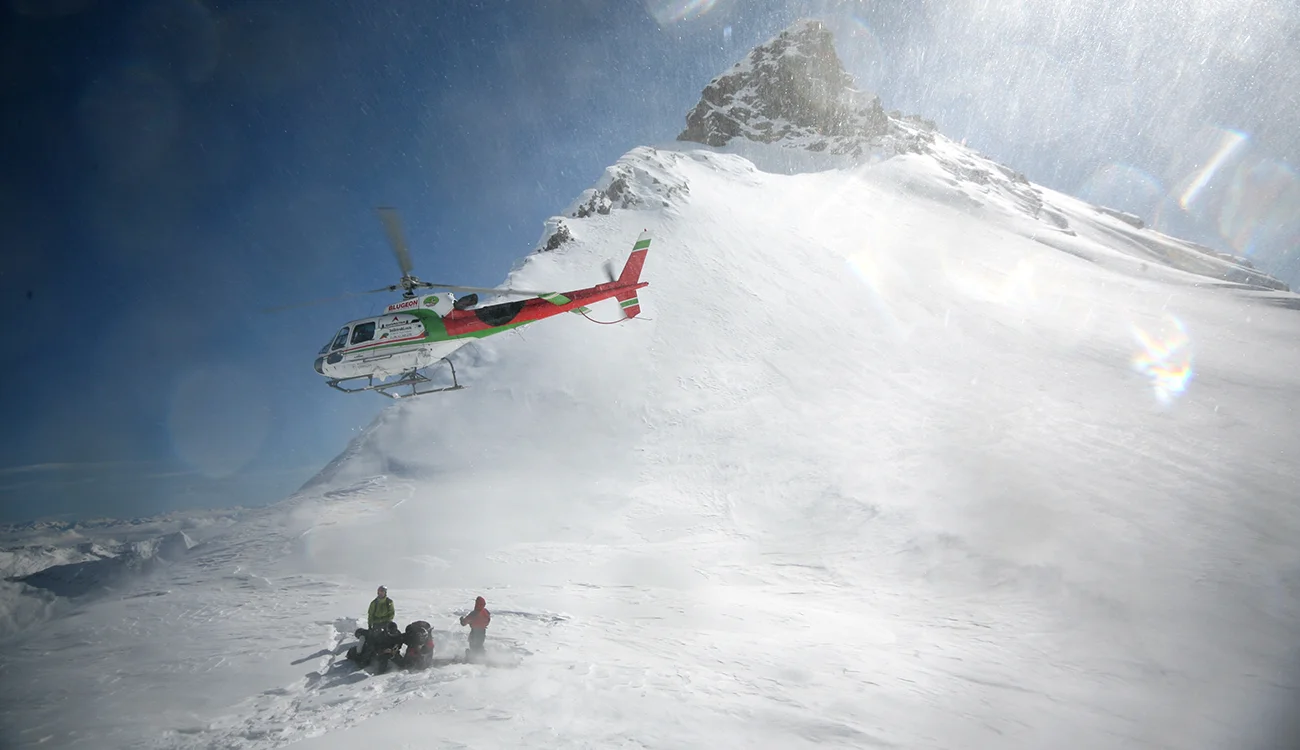
The number of drops is decided by the mountain. A seven-day safari is designed around two or three planned heli-drops — and when the universe cooperates, more are added. On a day when conditions at the drop zones are not right, zero is the correct answer — and our guides will never talk a pilot into flying because the schedule says “heli day.”
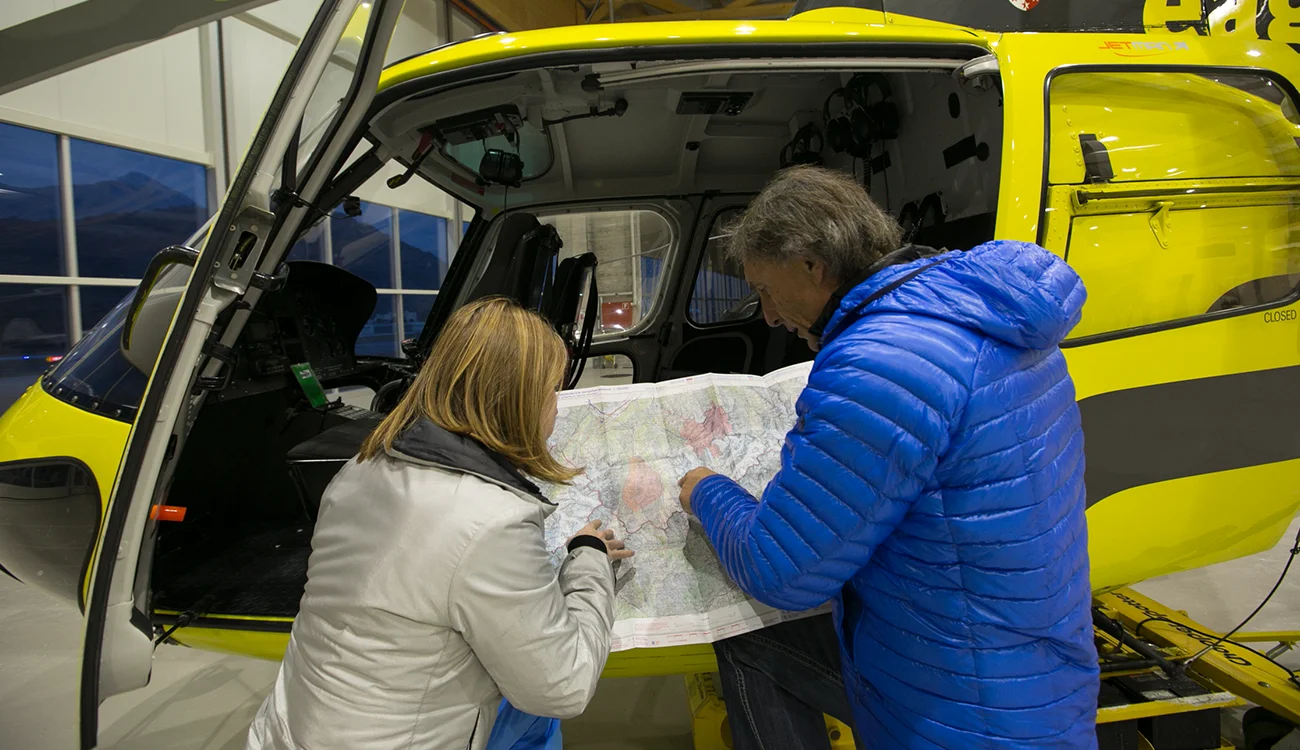
Here is what puts the odds on your side. Every heli day wakes up with a drop as the goal and a full day of exceptional guided off-piste skiing as the alternative — terrain most guests would never find on their own. Several helicopter companies are on standby, not one, because a good window can open and close within two hours and we intend to be in it. And watching it all: your dedicated guide and our snow consultant — who holds a PhD in snow forecasting — reading the mountain days ahead, so that when a window opens, we already know about it. With those tools on your side, the safari never depends on the helicopter: when it flies, it is a spectacular bonus; when it does not, the trip is still extraordinary, because it was designed that way from the first conversation.
→ Ask us what the mountain can offer
Why do we ski together before we fly?
The most important part of a heli-ski safari happens before the helicopter
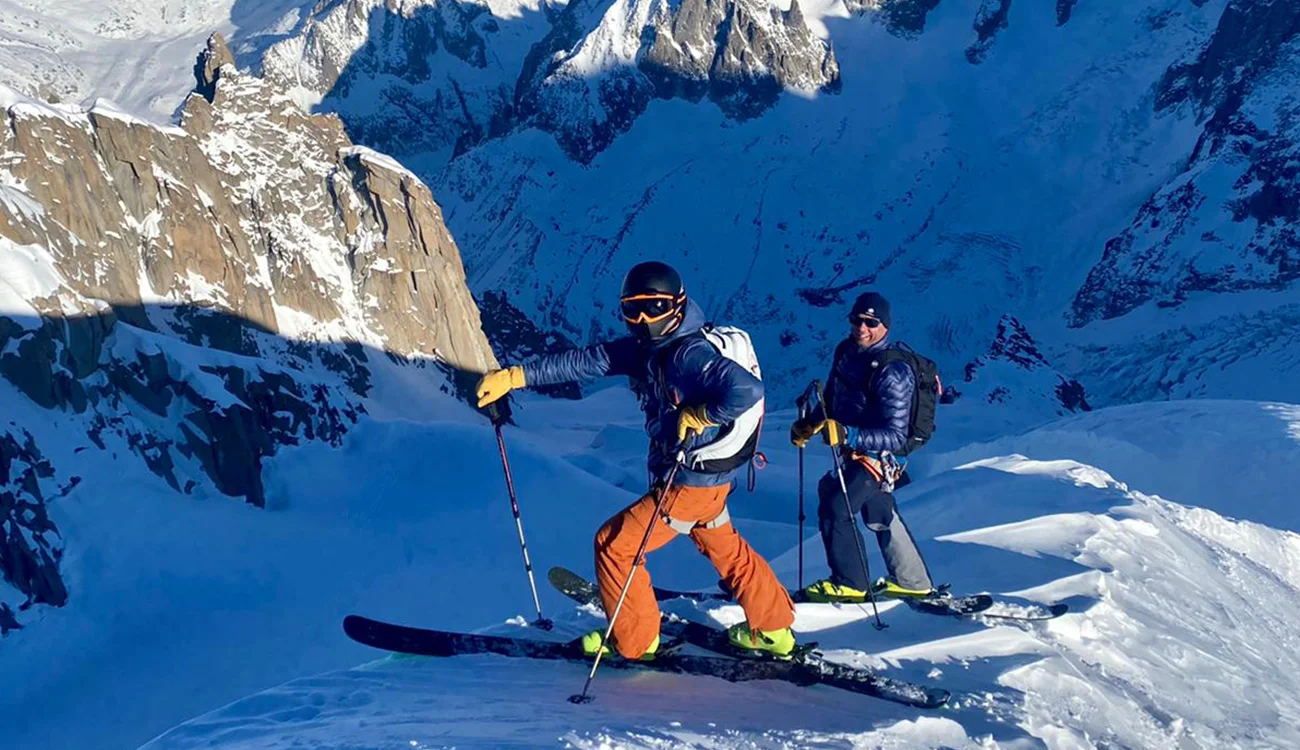
Every heli-ski safari we design begins with one or two days of guided off-piste skiing and riding before any helicopter is involved. A heli drop puts your whole group on a remote summit, far from any lift, on terrain that can be steep, wind-affected or glaciated — and in that environment it matters enormously that your guide knows how each person skis: their technical range, their reactions, how they communicate outside their comfort zone.
Those first days do three things. They let our guide assess everyone in terrain that resembles the heli descents, without the stakes of a remote summit — so if the planned drops need adapting, we know before we fly. They let the group become a group: by the time you step into the helicopter, you know the people you are flying with. And they build the legs — a descent of 1,500 to 2,500 vertical metres of untracked, variable snow is demanding in a way resort skiing never is, and two days of serious off-piste means you arrive at the summit ready for it. This is how a heli day becomes the best day of your skiing life instead of a stressful one.
How does a heli-ski safari unfold?
The weather commands the helicopter, not the itinerary… the safari is superb whether you fly twice or five times
We start with safety, and safety starts on skis. The first days of every heli-ski safari are spent skiing and riding with your guide: the shakedown of equipment, the avalanche gear checked and practised, the guide learning how each person moves in real terrain, the legs waking up to what is coming. Only then does anyone step into a helicopter. This is not a formality — it is what makes the heli days both safe and brilliant.
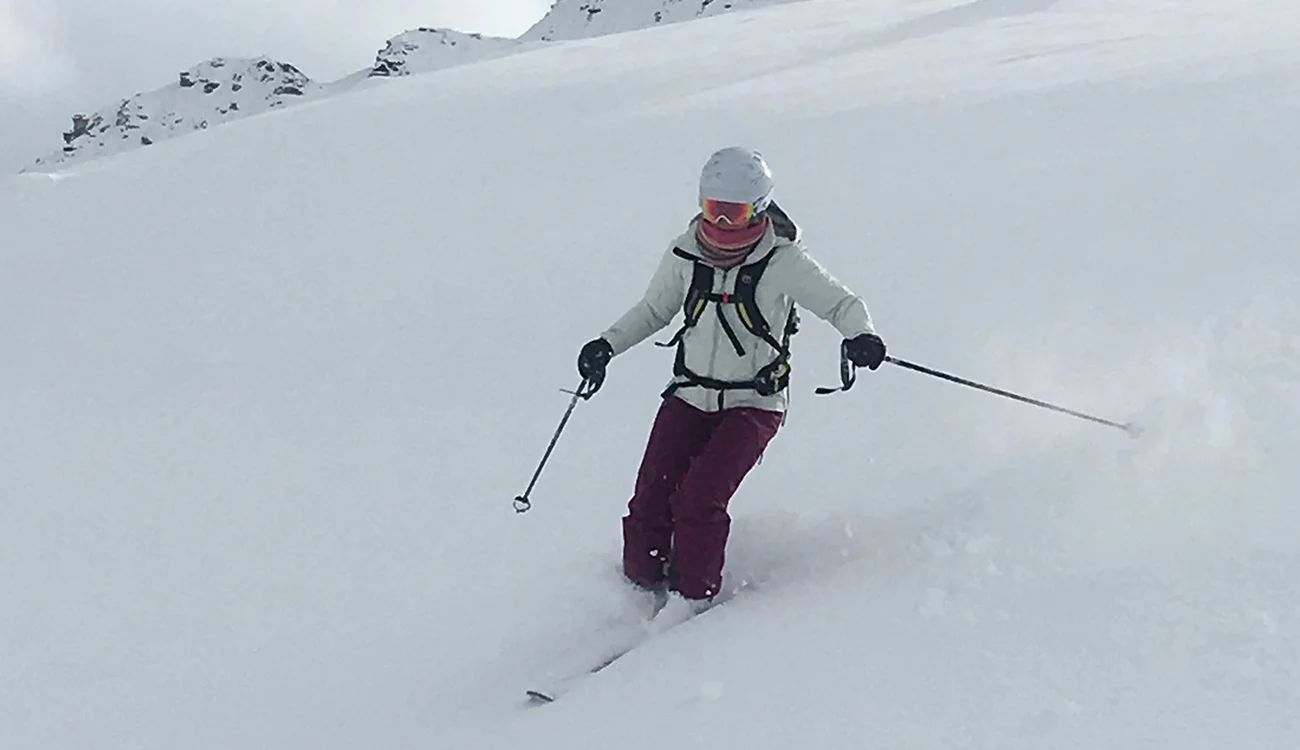
From there, the week takes the shape the mountain gives it. The lift-accessed off-piste in our region is long, wild and varied — descents most guests would never find on their own, and on the right day every bit as memorable as the flying. The helicopter is not a replacement for that skiing; it is the instrument we reach for when it makes sense — when the weather, the snow and the group align — to put you in places you would simply never see otherwise. Getting that balance right is the craft of a heli-ski safari, and it is why some weeks fly early, some fly late, and no two ever look alike.
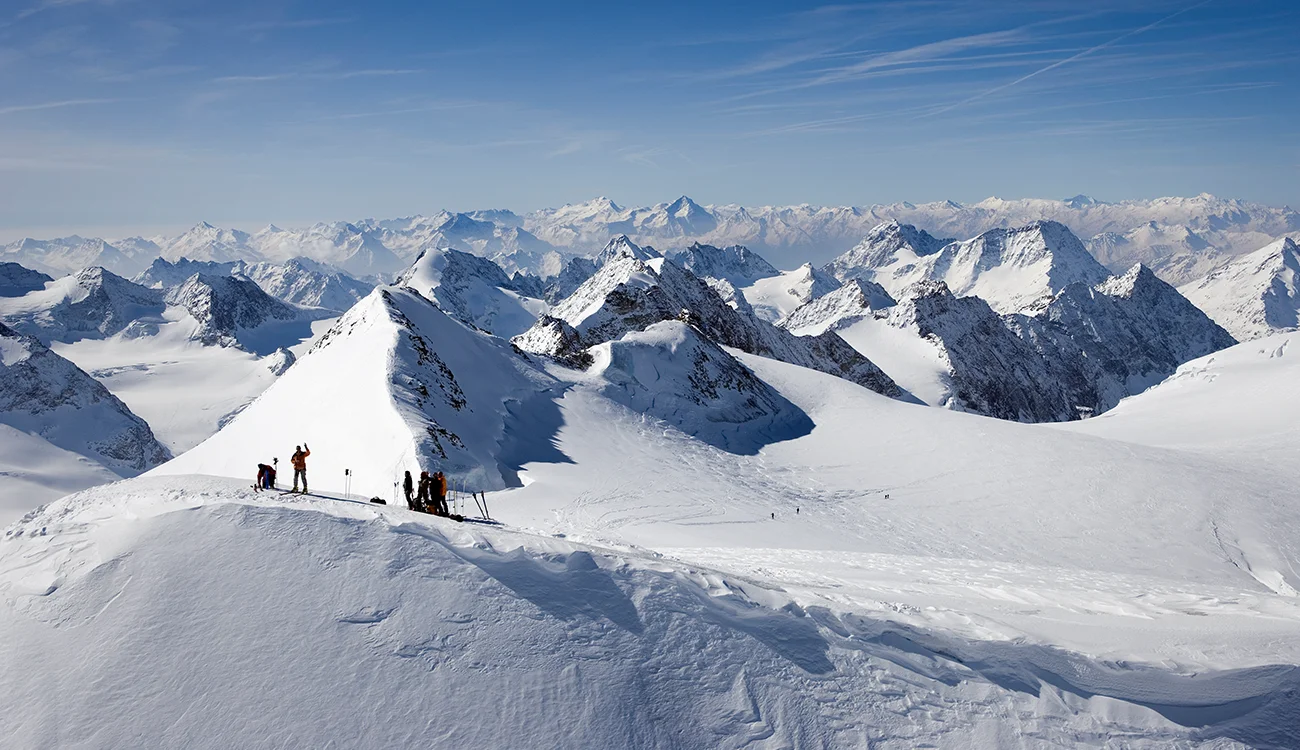
A safari is traditionally seven nights: long enough for several weather windows and a border crossing, short enough that your legs love every single day. Two or three heli-drops are planned — and when the universe cooperates, more are added.
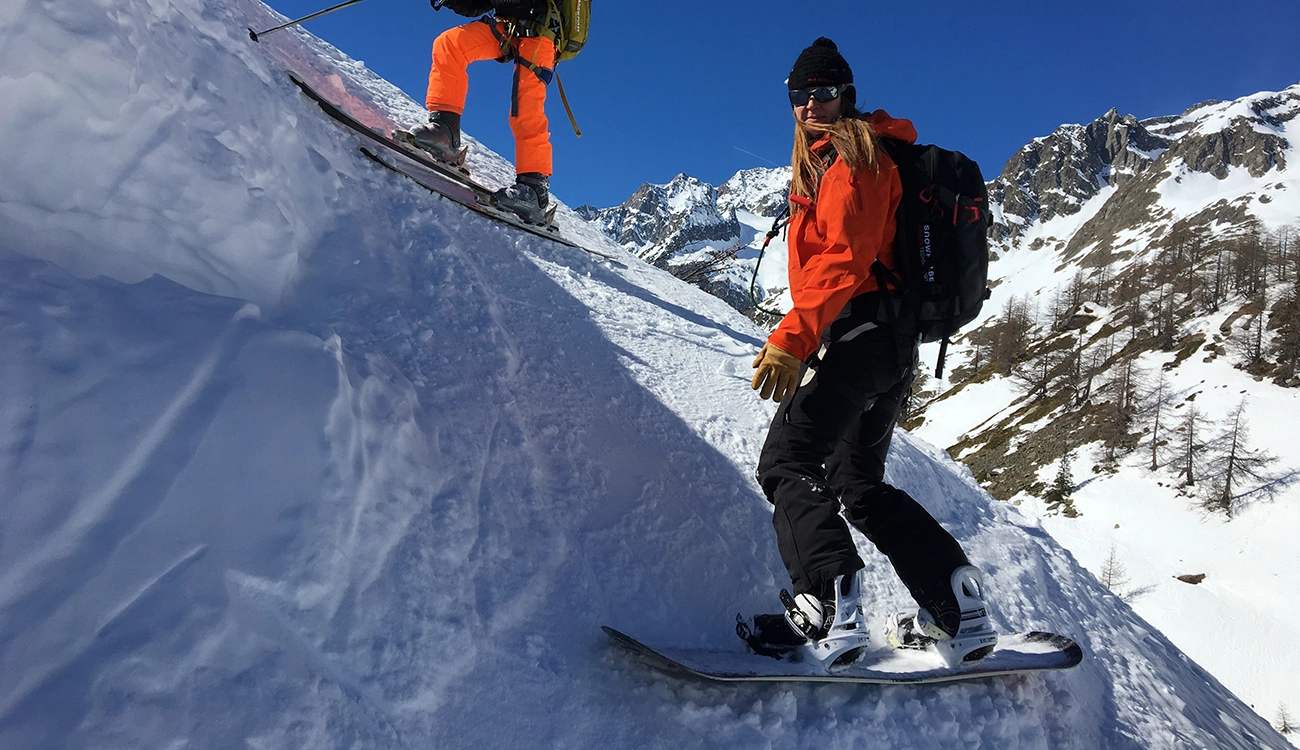
Heli-boarding: as good on a board as on skis
Founded by a snowboarder — it shows at 4,000 metres
SwisSkiSafari was founded by a snowboarder, and nowhere does that matter more than in heli terrain. Drop zones and descent lines are chosen with riders in mind: fall-line descents that flow, snow picked for the board, and none of the flat run-outs that can turn a rider’s dream day into a hike. A safari is always private, and skiers and riders in your group fly together — and the riders are never an afterthought: they are often the strongest legs on the mountain, because they have to be.
Frequently asked questions
Can you heli-ski in France? No. In France, helicopters fly for rescue and work rather than for skiing — setting down in the mountains for leisure has been prohibited since 1985. Our heli-ski programmes are designed in Switzerland and Italy, where mountain landings are permitted, and the two offer completely different days — high-alpine pick-ups in Italy, descents to the valley floor in Switzerland. The skiing itself, though, is not limited: on a privately guided safari, if the best conditions of the week are in France, we ski in France. Nothing is off the table.
How good a skier or rider do I need to be? You need to be a strong, confident off-piste skier or snowboarder — heli terrain has a genuine ability threshold. This is exactly why every safari begins with one or two guided off-piste days before the helicopter: our guides assess everyone in real conditions and adapt the planned drops to the group. Tell us your honest level and we will tell you what is possible.
How many drops per day? There is no fixed number — anyone quoting one in advance is guessing. A seven-day safari is planned around two or three heli-drops, and when conditions align, more are added — alongside days of world-class guided off-piste skiing. On a perfect day with the right group, multiple drops are achievable.
What happens if the helicopter cannot fly? You still have a superb day — by design. Every heli day carries a fully planned alternative: guided off-piste terrain our guides know intimately. The safari never depends on the helicopter; when it flies, it is the crown on the trip, not the foundation of it.
Can snowboarders heli-ski? Absolutely — in fact, heli terrain is often better on a board than on skis. Snowboarding was born for exactly these conditions: deep, untracked, off-piste snow. It only becomes complicated when the lines are chosen badly. So when there are riders in your group, we look hard at which heli-drops we fly and avoid any that involve long traverses — descents that flow, fall-line, top to bottom. Safaris are always private, and your skiers and riders fly together.
How much does a heli-ski safari cost? Every safari is bespoke, so there is no fixed price. As a starting point, most guests invest from CHF 1,500 per person per day, with helicopter time quoted precisely in your proposal. We are happy to talk through what is possible and come back with a detailed plan.
How do I start planning a heli-ski safari? With a conversation. Tell us who you are, how you ski or ride, and when you want to come — and we will tell you honestly what the mountain can offer. For a heli-ski safari especially, we want to talk about every member of your group: how each person skis or rides, whether there is more than one level among you, what each of you is hoping for. The drops, the terrain, the shape of the week — all of it is designed around those answers. That is why starting early serves you twice: the finest hotels across our region are held six months or more ahead, and the more time we have, the more completely we can plan around your group. If the season is close, ask anyway — sometimes the right week is still open.
Begin planning your safari
Every safari begins the same way: with a conversation
You have read how it works. Here is how it starts.
Contact us to design your heli-ski safari →
Or call us directly: +41 79 239 41 52
``Someday we will not be able to do this. But today is not that day.`` — Danielle Stynes, Founder