



19 Aug Why Downhill Skiers Fall for Ski Touring

It’s a different sport wearing the same skis — here’s what draws people to it, and why easing in beats diving in
If you’ve only ever skied resorts, ski touring can feel mysterious. Why climb a mountain on skis when a lift will take you up in six minutes? It’s a fair question, and one almost every touring guest has wondered before trying it.
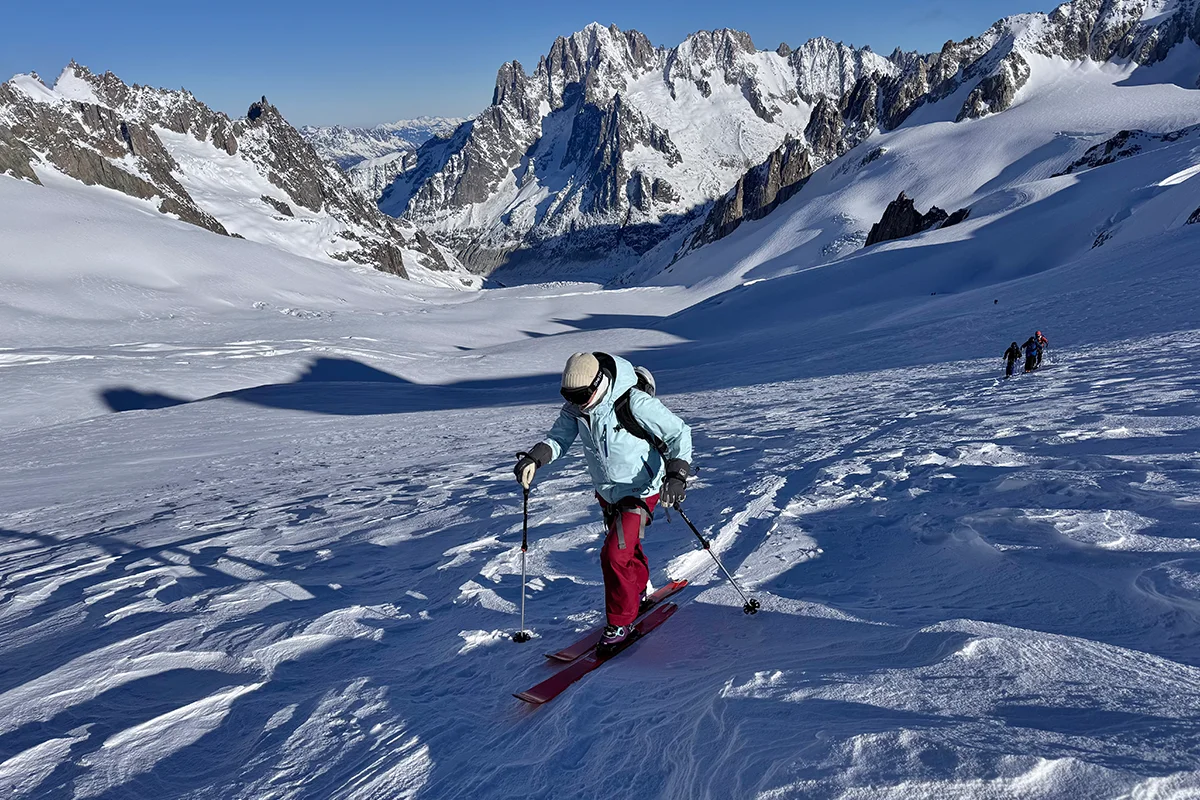
The answer seems to be a mix of a love of skiing (that resort pistes stopped satisfying), a want for something more physically demanding and the chance to be properly alone in the mountains. No lift queue, no crowd at the top, just the sound of your own skins on snow.
It’s a different sport, not an extension of the one you know
This is the part downhill skiers often underestimate. The equipment is different: skins, touring bindings that free the heel, a different rhythm of movement entirely. Kick turns take practice. Transitions take practice. None of this comes for free just because you can ski a black run without thinking about it.
Because of that, the pleasure isn’t always immediate. The first few tours can feel like learning to ski all over again, which is strange and slightly humbling for someone who has skied well for twenty years. That’s normal, and it passes quickly — but it’s worth knowing going in.
The terrain is real, and that’s exactly the point
Beyond the lifts there are no patrols, no groomed line home, and no signage telling you where the danger is. That’s precisely what makes touring so rewarding, but also risky. These risks are often invisible to someone reading the terrain for the first time, which is why a qualified guide is essential.
Learn the ropes properly, take the first days easy, and let your skill and your judgement grow together, slowly. Nobody regrets a gentle start. People occasionally regret a fast one.
Our advice for beginners: mix it with downhill first
If you’re coming to touring for the first time, combine it with resort skiing rather than committing to a full week of skins immediately. Ski some lift-accessed days, tour on others, and let your body and your technique adjust gradually.
A gentle mix of touring and downhill days means nobody is fighting the equipment and the mountain at the same time. The reward — the silence, the untracked snow, the feeling of having earned the descent — has room to actually land.
What this means for your first safari
On a guided touring safari, this balance is built in rather than left to chance. Some days are pure tours, some use the lifts and tour beyond the top station, some are simply excellent guided skiing, resting the legs that did the climbing yesterday. The mix is designed around fitness, snow and how the group is feeling, not fixed in advance. Experience has taught us that this gentle, adjustable start makes touring click rather than grind.
Every trip is tailor-made around you
Every one of our trips is private, and every one is designed from scratch around the people taking it. Your group is entirely your own, and the terrain, the pace, and the balance of touring and lift-accessed days are built specifically for you. Your guide will make adjustments daily as they read how you’re doing.
What we keep consistent is the combination of challenge on the mountain by day, real luxury by night. A guided tour that earns the descent, followed by a proper lunch — often somewhere only our guides know — and an evening built around exceptional local food and wine. That contrast is the whole point of a safari: you work for the skiing, and then the mountains take care of you completely.
Warm regards from the mountains,
Danielle